Sitka to Seattle
September 3 – 14, 2011
September 3 – Anchorage to Sitka
 |
| NG Sea Lion, taken at a different location |
After a morning flight
from Anchorage to Sitka we were taken to a hotel near the dock where those
waiting to board the National Geographic
Sea Bird would stay overnight, and where we could hang out. We ate lunch
close by and then boarded a bus for a tour around Sitka.
Before starting this Photo Expedition with Lindblad Expeditions, we were taken to the
Alaska Raptor Center to see a variety of birds that needed medical attention
and rehabilitation.
Then we went to the Sitka
National Historical Park where there was a nice museum and many totem poles
from the Tlingit tribe.
Back in town we learned some
history about Russia’s activity in the area during the nineteenth century. We
visited Saint Michael’s Cathedral before having some free time to wander around
the small town. It rained the whole time.
In the late afternoon we
boarded the National Geographic Sea Lion,
the 50-passenger boat that would be our home for the next twelve days through
the Inside Passage to Seattle. It was so good to be back with our favorite
photographers, Jack and Rikki Swenson and National Geographic photographer Flip Nicklin. We knew it was going to be a fun trip.
September 4 - Chatham Strait and Pavlof Harbor
During the night we had sailed through Peril Strait and into Chatham Strait, which is the longest and deepest fjord in North America. It wasn't long before we spotted three brown bears along the shore which started the day and expedition in the right direction. Humpback whales accompanied us along the cruise north.
In the afternoon we pulled into Pavlof Harbor where there were choices of various length walks or zodiac rides. We chose the ride and got close to a water fall where later some of the hikers saw a bear pulling salmon out to eat. Sorry we missed that.
September 5 – Icy Strait, George Island and Inian
Islands
 |
| Rikki Swenson, right, gives photo support |
This morning we were in
Icy Strait. We headed north to Cross Sound, which goes out (west) to the Gulf
of Alaska across the north side of Chichagof Island and south of Glacier Bay
National Park.
 |
| Grace photographs Jack Swenson |
The first outing was to
George Island where some had a chance to go kayaking and others of us found
help with photo questions, hiked around the dense forest area and spent some
time photographing the small things like brilliantly colored mushrooms.
During lunch we sailed
further west in Cross Sound and in the afternoon took turns (odd then even
cabins) for zodiac cruises around Inian Islands. We saw many birds and sea
otters but no bear.
On our zodiac ride Pete
Pederson (one of the staff) took us all the way around a small island at the
mouth of the sound and we fully felt the rough seas and pelting rain as we
hunkered down. It was one of those experiences that are fun to talk about
later.
In the afternoon
naturalist Pete gave a lecture on “Glaciers” in preparation for our visit to
Glacier Bay the next day.
September 6 – Glacier Bay National Park
 |
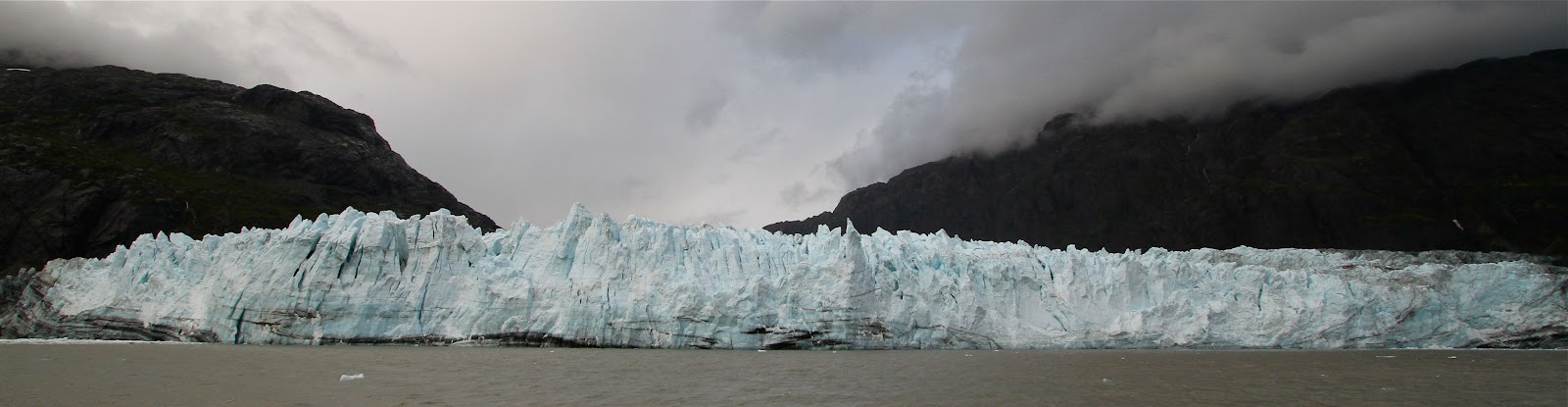
| Margerie Glacier |
During the night we had
sailed the 65 miles through Glacier Bay to the north end of Tarr Inlet. When we
woke we were alongside the Margerie Glacier.
 |
| Grand Pacific Glacier covered with soil |
The night before we had
picked up a National Park Ranger and a Tlingit Cultural Interpreter. They
participated in the explanations of the area. We were fortunate that it was not
raining and we saw one calving glacier face while there. At the north end of
the bay is also the Grand Pacific Glacier, which, 200 years ago completely
filled the 65-mile long valley. Now the glacier continues to recede.
We spent all day in
Glacier Bay sailing back south with a side trip into John Hopkins Inlet for a
view of the glacier with the same name. In Geikie Inlet we took zodiac rides to
see the sea lions on rocks along the shore and also many birds.
 The clouds cleared
eventually and gave us a beautiful rainbow.
The clouds cleared
eventually and gave us a beautiful rainbow.
 We enjoyed a pod of orca whales on
our way to a late stop at Bartlett Cove in Gustavus where we dropped off the
Ranger and Cultural Guide. Those who wanted took a walk ashore since we were
actually at a dock.
We enjoyed a pod of orca whales on
our way to a late stop at Bartlett Cove in Gustavus where we dropped off the
Ranger and Cultural Guide. Those who wanted took a walk ashore since we were
actually at a dock.
September 7 – Juneau
This morning we pulled into
a small dock in Juneau, dwarfed by the three huge cruise ships already
alongside the city wharf. It turned out to be a beautiful sunny day and our
first stop was out to the Mendenhall Glacier. We watched salmon coming up the
stream to spawn and had a very close encounter with an old resident black bear.
Flip Nicklin gave me a copy of his picture with me at the far right end,
looking the wrong way. I did get turned around in time for one good shot of the
bear.
 |
| Juneau |
Back in town we visited
the Alaska State Museum and then wandered through the town, which is small so
it didn’t take long. We were back aboard by 2:00.
 As we sailed south through
Stephens Passage we encountered a large pod of orca (killer) whales and another of humpback
whales, all in the same area. We spent quite a bit of time with them so Flip
had to keep delaying delivering his talk “Among Giants.”
As we sailed south through
Stephens Passage we encountered a large pod of orca (killer) whales and another of humpback
whales, all in the same area. We spent quite a bit of time with them so Flip
had to keep delaying delivering his talk “Among Giants.”
September 8 – LeConte Bay and Petersburg
 Icebergs were the order of
the morning as we anchored in LeConte Bay. The LeConte Glacier is the
southernmost sea level glacier in North America and it calves off large blue
icebergs. We took turns (odd – even cabins) taking zodiac rides in amongst the
grounded icebergs, which was somewhat reminiscent of Antarctica except the
hills here were covered with evergreen trees.
Icebergs were the order of
the morning as we anchored in LeConte Bay. The LeConte Glacier is the
southernmost sea level glacier in North America and it calves off large blue
icebergs. We took turns (odd – even cabins) taking zodiac rides in amongst the
grounded icebergs, which was somewhat reminiscent of Antarctica except the
hills here were covered with evergreen trees.
At noon we pulled up to
the dock in Peterburg, a quaint small town founded by Norwegian fishermen over
100 years ago. Even though it was raining fairly hard (hence no photos) we
walked around to get a feel for this major fishing community.
Back aboard, and after a
late lunch, we continued south through Wrangell Narrows, a very scenic area,
but it was still raining hard so we watched from inside and Grace edited her
pictures.
September 9 – Misty Fjords National Monument
 |
| Jack Swenson, always looking for wildlife |
During the night we had
sailed south in the Clarence Strait and turned into the Behm Canal to go around
the north side of Ketchikan Island. By mourning we were heading south in the
canal in the Misty Fjord National Monument.
It was a beautiful sunny
day, not at all misty, and we enjoyed being out on deck watching the beautiful
scenery go by. At some point in the morning Flip Nicklin gave his talk entitled
“It’s OK to Shoot People.” He is always fun and an inspiration, and people
photography is Paul’s specialty.
By afternoon we were
sailing into the very narrow, steep-sided fjord called Rudjard Bay. The Sea Lion dropped anchor and gave us a
chance for long zodiac rides to explore the area with its beautiful waterfalls.
 The crew put the kayaks
into the water and everyone who wanted was able to use them. It was a very calm
and peaceful setting.
The crew put the kayaks
into the water and everyone who wanted was able to use them. It was a very calm
and peaceful setting.
 Since we were just over
the hills from Ketchikan there were float planes coming and going for sight
seeing and commuting. It was a delightful, beautiful, calm day.
Since we were just over
the hills from Ketchikan there were float planes coming and going for sight
seeing and commuting. It was a delightful, beautiful, calm day.
September 10 – Prince Rupert
Overnight we had continued
south, out of Alaskan waters and into British Columbia. We were on the east
side of Chatham Sound and docked in Prince Rupert. Right after breakfast we
disembarked, went through Canadian customs, and walked in to town to The Museum
of Northern British Columbia where we divided into groups and took a tour.
From the museum we walked
a short way to see a native cultural dance. This was very interesting in that
their dances and songs told stories of their lives and history. It was a small
intimate setting.
 Back aboard for lunch, then
we spent the beautiful afternoon sailing south looking for illusive wild life.
We sailed past Porcher Island and into the very narrow Greenville Channel with
Pitt Island to our west.
Back aboard for lunch, then
we spent the beautiful afternoon sailing south looking for illusive wild life.
We sailed past Porcher Island and into the very narrow Greenville Channel with
Pitt Island to our west.
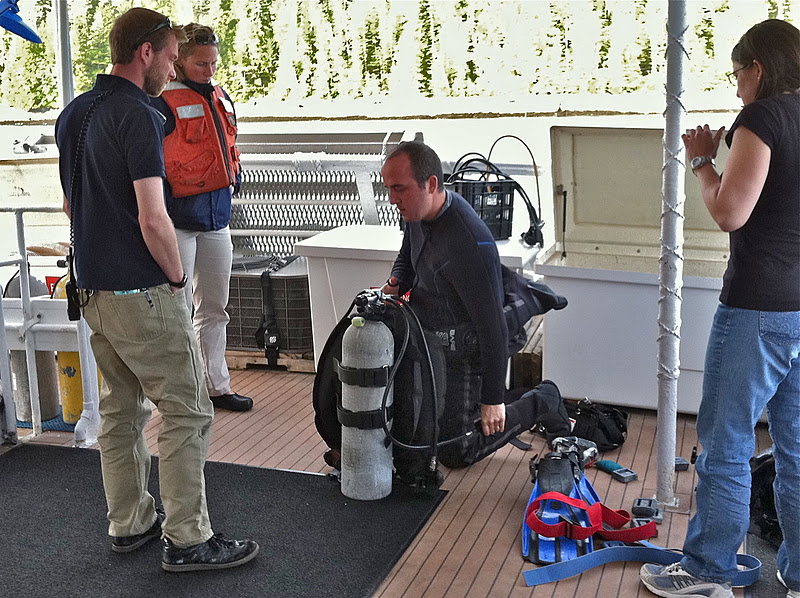
 In the late afternoon the captain received a distress
call from a shrimp boat, which was stranded in a close-by very narrow stream.
They had managed to get their nets entangled in their propeller. Our Hotel Manager,
Michael, put on his dry suit, collected his diving gear and was taken in one of
our zodiacs up the stream to “save the day.” It turned out he could clear their
problem fairly quickly, and they were very happy, sending back some shrimp for
the crew.
In the late afternoon the captain received a distress
call from a shrimp boat, which was stranded in a close-by very narrow stream.
They had managed to get their nets entangled in their propeller. Our Hotel Manager,
Michael, put on his dry suit, collected his diving gear and was taken in one of
our zodiacs up the stream to “save the day.” It turned out he could clear their
problem fairly quickly, and they were very happy, sending back some shrimp for
the crew.
After dinner Jack Swenson
gave his presentation entitled “An Eye for Evocative Images.”
September 11 – Altanash Inlet and Cruising Princess
Royal Island
Over night we continued
south in Grenville Channel and by morning were heading into Altanash Inlet.
This is an area that was new to the entire staff and crew and turned into one of
the most ethereal places we visited. It was so beautiful with the misty fog hovering
and shifting all morning.
Hikes and zodiac rides
were available all morning and there was no shortage of interesting scenes to
photograph.
 At one point we went
ashore to photograph the small plants. Getting close up pictures was difficult
as little gnats that bit swarmed around our hands. Ugh!
At one point we went
ashore to photograph the small plants. Getting close up pictures was difficult
as little gnats that bit swarmed around our hands. Ugh!
In the afternoon our
Cultural Specialist, David Stephens, gave his talk on “Native Northwest Coast
Art and Technology.”
September 12 – Alert Bay, British Columbia
Overnight we had continued
south in Fitzhugh Sound and entered Queen Charlotte Sound. After breakfast we
docked at Alert Bay, which is a fishing community on Cormorant Island at the
north end of Vancouver Island.
 We could walk or take a
shuttle bus up the hill to the Lawrence Amber Memorial Center where the staff
of the U’Mista Museum made a cultural presentation. Afterward we walked back down
the hill and visited the Alert Bay Big House, built in 1963 and rebuilt after a
fire in 1999.
We could walk or take a
shuttle bus up the hill to the Lawrence Amber Memorial Center where the staff
of the U’Mista Museum made a cultural presentation. Afterward we walked back down
the hill and visited the Alert Bay Big House, built in 1963 and rebuilt after a
fire in 1999.
The adults and children of
the Nimpkish First Nations performed their traditional dances for us in full
costume and with elaborate masks. It was a very special, and photographically
challenging event that ended with audience members invited to join in the
dancing.
At the end they offered us
smoked salmon and fry bread with jam as we exited the Big House. Gifting is a
big part of the Potlatch ceremony.
After a little time to
visit the museum gift shop and walk around town we were back aboard in time for
lunch, which was served out on the back deck.
As we continued south for
the afternoon, through Johnstone Strait we stayed out on deck looking for
wildlife. We were not disappointed. First, to our delight, there were orca
whales.
 In the middle of the
afternoon we were able to work in Rikki Swenson’s talk “Thinking Outside the
Shoe Box” with ideas on what to do with all of your pictures – those taken past
and present. At the end she had to wrap up quickly because we encountered a
large pod of Pacific White-Sided Dolphins. There must have been 200 – 300 of
them all going about their job of eating. We spent quite a while with the
dolphins before leaving them and continuing south.
In the middle of the
afternoon we were able to work in Rikki Swenson’s talk “Thinking Outside the
Shoe Box” with ideas on what to do with all of your pictures – those taken past
and present. At the end she had to wrap up quickly because we encountered a
large pod of Pacific White-Sided Dolphins. There must have been 200 – 300 of
them all going about their job of eating. We spent quite a while with the
dolphins before leaving them and continuing south.
September 13 – San Juan Islands and Friday Harbor
During the night we left
Johnstone Strait along Vancouver Island and spent the day in Georgia Strait and
on into the San Juan Islands. Since it was our last day aboard we spent some of
our time trying to get everything packed up.
During the day Flip
Nicklin gave his final talk “How Story Happens.” It was very interesting to
learn how National Geographic operates
and how the writers and photographers don’t necessarily work together on a
project. Flip has been with them for close to thirty years, specializing in
whales.
By late afternoon we
docked at Friday Harbor and after clearing U.S. Immigration we enjoyed walking
through town. We were able to find one of the last copies of Flip’s new book Among Giants.
 |
| Paul, Grace, Rikki and Jack |
We also arranged a way to
have our picture taken with Jack and Rikki Swenson. This has been our eleventh
trip with them since meeting in 2003 on a Svalbard Photo Expedition with
Lindblad.
There was the usual
Farewell Dinner in the evening followed by the “Laptop Gallery,” which is a
tradition on Photo Expeditions. Those of us who brought a laptop with us, and
had been editing pictures along the way, made a three-minute slideshow of our
best or favorite pictures. The laptops were setup in the lounge and guests were
encouraged to go from one to the other, watching the trip review through the
eyes of the other photographers. There were over a dozen shows to watch. This
is a favorite part and great ending to the trip.
September 14 – Seattle
Overnight we had finished
sailing into Puget Sound and were tied up at the dock right in downtown
Seattle. After breakfast and final farewells, we boarded the shuttle bus for
SEATAC, the Seattle airport, for our short flight back home to Portland. This
was another great voyage and experience.
That's it for now.
Grace and Paul

 This day we left Nairobi in our five Micato Safari vehicles
(all Toyota Land Cruisers) to drive northwest along and into the Great Rift
Valley, which cuts north/south across Africa from Israel to Mozambique. The
road is paved and is a pleasant drive through the country.
This day we left Nairobi in our five Micato Safari vehicles
(all Toyota Land Cruisers) to drive northwest along and into the Great Rift
Valley, which cuts north/south across Africa from Israel to Mozambique. The
road is paved and is a pleasant drive through the country.


 Each evening before dinner a local group performed songs and
dances. The end always involved some audience participation. The first night, I
just couldn’t say no to the nice young man who talked me through the dance
routine; a real aerobic workout!
Each evening before dinner a local group performed songs and
dances. The end always involved some audience participation. The first night, I
just couldn’t say no to the nice young man who talked me through the dance
routine; a real aerobic workout! The morning of February 4 we said good-bye to our driver
guides at the airstrip and boarded two planes to continue our adventure at
Little Governor’s Camp in the Maasai Mara National Reserve.
The morning of February 4 we said good-bye to our driver
guides at the airstrip and boarded two planes to continue our adventure at
Little Governor’s Camp in the Maasai Mara National Reserve.